

Afrofuturism, Reimagining the Future in Black Culture
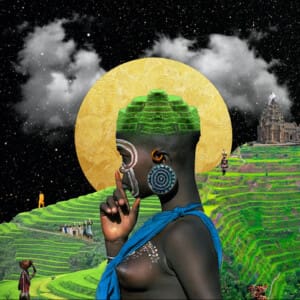
Image Credits: Manuel Bowman, Digital Collage
Afrofuturism made its debut in 1993 when Mark Dery coined the term in his essay “Black to the Future,” which looked to 1980s art and visual culture as a way of (re)imagining the past, present, and future of Black culture. Dery was interested in projecting a positive perspective on Black culture and life while focusing on Black joy. Afrofuturism gives Black people a chance to explore art freely without a graphic portrayal of the traumatizing history regularly represented in films, music, and other art forms in popular culture. By repressing images of the violent history of oppression of Black bodies and turning toward a positive outlook of the future, Chelsea Vowel has written that “under the external gaze of the white anthropologist colonizer,” BIPOC art switches the roles of the observer and the observed.
Artwork based around Afrofuturism takes a technology-forward, futuristic approach to the African Diaspora. Many paintings are full of color, organic shapes, and African elements. Ryan Coogler’s film “Black Panther” portrays the high-tech African nation of Wakanda, on theme with Afrofuturist style.
Afrofuturism represents a portion of African American culture that is often under-appreciated and under-portrayed. It shifts the mainstream white narrative in the museum, exposing a diverse community that is interested in Black culture as its own, as opposed to how Black society is affected by white people. Black futurity is an “escape” from a “white world” and a push toward concern with Black identity, a different approach to celebrating Black identity and culture.
Sources:
Book Review: ‘Black Futures,’ by Kimberly Drew and Jenna Wortham – The New York Times
Afrofuturism – Literary and Critical Theory – Oxford Bibliographies
